
Criminal Cases in Jefferson County Courts
Jefferson Combined Court belongs to Colorado's First Judicial District. Its District Court hears felonies and other general-jurisdiction matters. County Court keeps misdemeanors, traffic cases, and the first stages of felony complaints before transfer. A city ordinance case stays with the municipal court that issued it, so a Lakewood, Arvada, or Westminster citation may not appear in the same file as a state criminal charge.
The Clerk of Court keeps the official Jefferson County case file at 100 Jefferson County Parkway in Golden. The main number is 720-772-2500, while Records and Research uses 720-772-2570. The clerk's file, not an arrest report, establishes what prosecutors filed and how the judge resolved each count. That distinction matters when an initial booking charge differs from the complaint.
Jefferson County Docket Search Limits
The Colorado Judicial Branch Docket Search is free, but it is a calendar and docket finder rather than a case-file viewer. It can help confirm a court date and location. It does not deliver pleadings, orders, exhibits, or certified dispositions. Paid court-data services may show a register of actions by name or case number, but even those services cannot supply the filed documents.
The official court records access guide explains this split. Use the web search to orient the request, then ask Jefferson County Clerk staff for the actual record. The source page is pictured below.
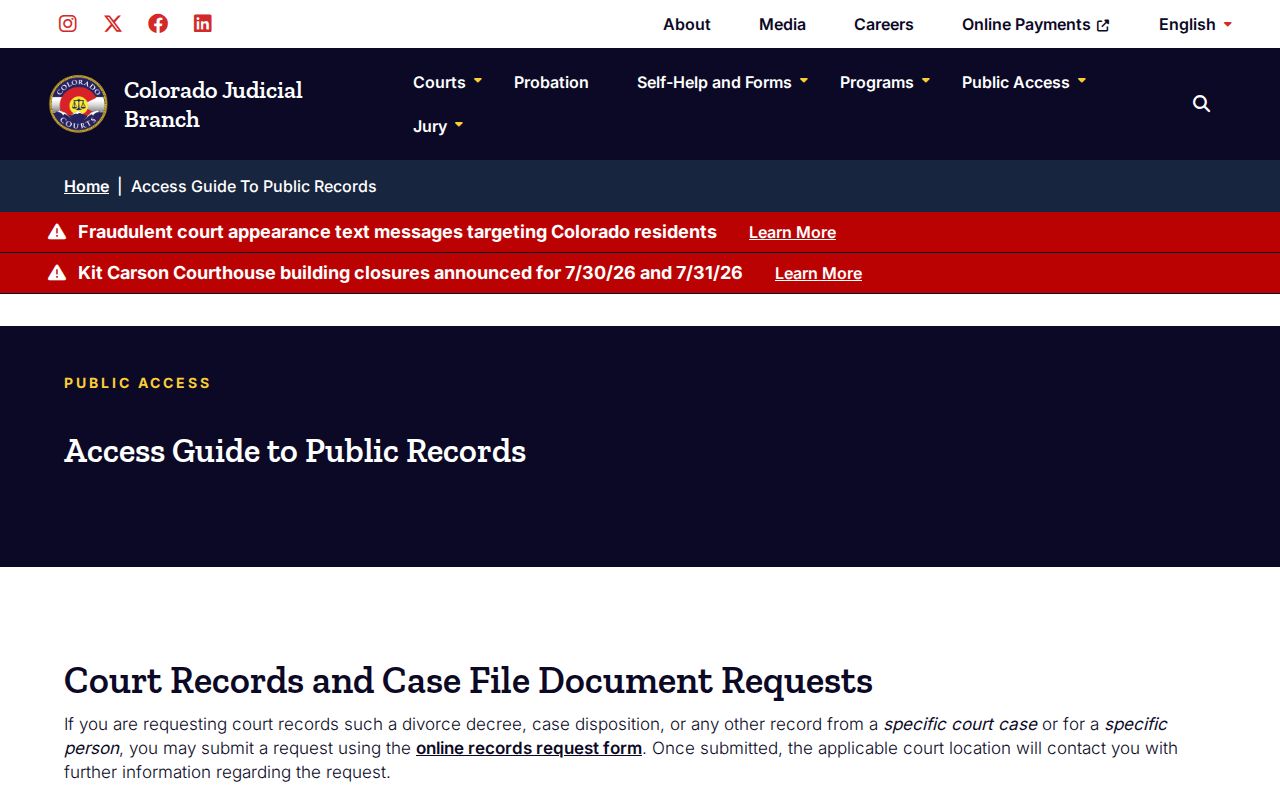
The access guide helps prevent a docket entry from being mistaken for the complete Jefferson County court file.
How to Search Case Records
Start with the event date and the court level. A person-name search is available through linked register services, while the free state interface is built around dates and locations. For a reliable Jefferson County criminal case search:
- Open the official docket search and enter the date tied to the hearing or court calendar.
- Add at least one location filter, such as First Judicial District, Jefferson County, or Jefferson Combined Court.
- Review the returned calendar data and note the case number, court, division, and hearing date.
- Contact Records and Research when the online result does not identify the filing or final outcome needed.
- Request the specific pleading, order, judgment, or certified disposition from the clerk by counter, email, mail, or form.
| Field Label | Type | Required | Notes |
|---|---|---|---|
| Date | Date | Yes | A date alone is not enough |
| Judicial District | Dropdown | Optional | Select First Judicial District |
| County | Dropdown | Optional | Select Jefferson |
| Courthouse | Dropdown | Optional | Select Jefferson Combined Court |
Jefferson County Filed Document Requests
The Records and Research counter is open Monday through Thursday from noon to 4 p.m. and closes Friday. A request can also go to Jefferson County Clerk of Court by mail, through the records form and window basket, or by email at jeffcorecordrequest@judicial.state.co.us. Pleadings may be placed in an envelope in the courthouse atrium drop box.
Name the case number and the exact document whenever possible. Ask for a quote if a fee may apply because the research does not establish one flat price for every copy. The counter can also explain whether a record is held by District Court, County Court, or a municipal clerk. These routes are especially useful for residents who cannot reach Golden during the short counter window.
What the Case File Shows
A Jefferson County criminal case file records the court's work after the prosecutor files a charge. Each part answers a different question, so readers should ask for the item that matches their purpose rather than a vague “background check.”
| Case Number & Court | Identifies the court level, file, and division handling the matter. |
|---|---|
| Charging Document | States the counts filed by the prosecutor, which may differ from booking allegations. |
| Docket Entries | Chronologically list filings, hearings, orders, and other case activity. |
| Hearing Dates | Show scheduled appearances and calendar changes. |
| Disposition & Judgment | Records dismissal, acquittal, plea, or finding on each count. |
| Sentence & Conditions | Shows the court's sentence and conditions imposed after conviction. |
Terms such as arraignment, disposition, and register of actions describe different steps. The register is the activity index. A disposition is the result for a charge. An arraignment is the hearing at which the accused answers the filed charge.
Jefferson County Specialty Court Dockets
The First Judicial District added Competency Court in January 2024 for defendants who need competency-restoration services. Jefferson County also has Mental Health Court and Veterans Treatment Court. A case routed into one of these tracks can contain hearings and orders that do not fit a simple trial timeline. A pause for competency work, for example, is not itself a dismissal or conviction.
The online register may show the activity without explaining every underlying filing. Obtain the order from the clerk before drawing a conclusion from a gap or a changed hearing date. Specialty treatment tracks also remain court cases unless a separate program or order changes that status.
Stages of a Criminal Case
A felony complaint may begin in County Court, then transfer to District Court. Misdemeanors generally remain in County Court, while municipal ordinance matters follow the city court. No fixed timetable applies to all Jefferson County cases because motions, competency questions, plea talks, trials, and scheduling can change the path.
Case flow: Charges Filed › Arraignment › Pretrial › Plea or Trial › Disposition › Sentencing
At each point, look for the filed document rather than relying only on a calendar label. The Jefferson County arrest history may explain the booking, but the court file controls the filed counts and outcome.
Jefferson County Sealing Orders
Colorado sealing restricts ordinary public access but does not vacate a conviction or erase access for every authorized justice agency. Juvenile delinquency records use the term expungement. Eligibility depends on the result, offense, dates, later convictions, and statutory exclusions.
The Judicial Branch provides current seal-my-case forms and instructions. The Colorado General Assembly also publishes a sealing and expungement overview, shown below.
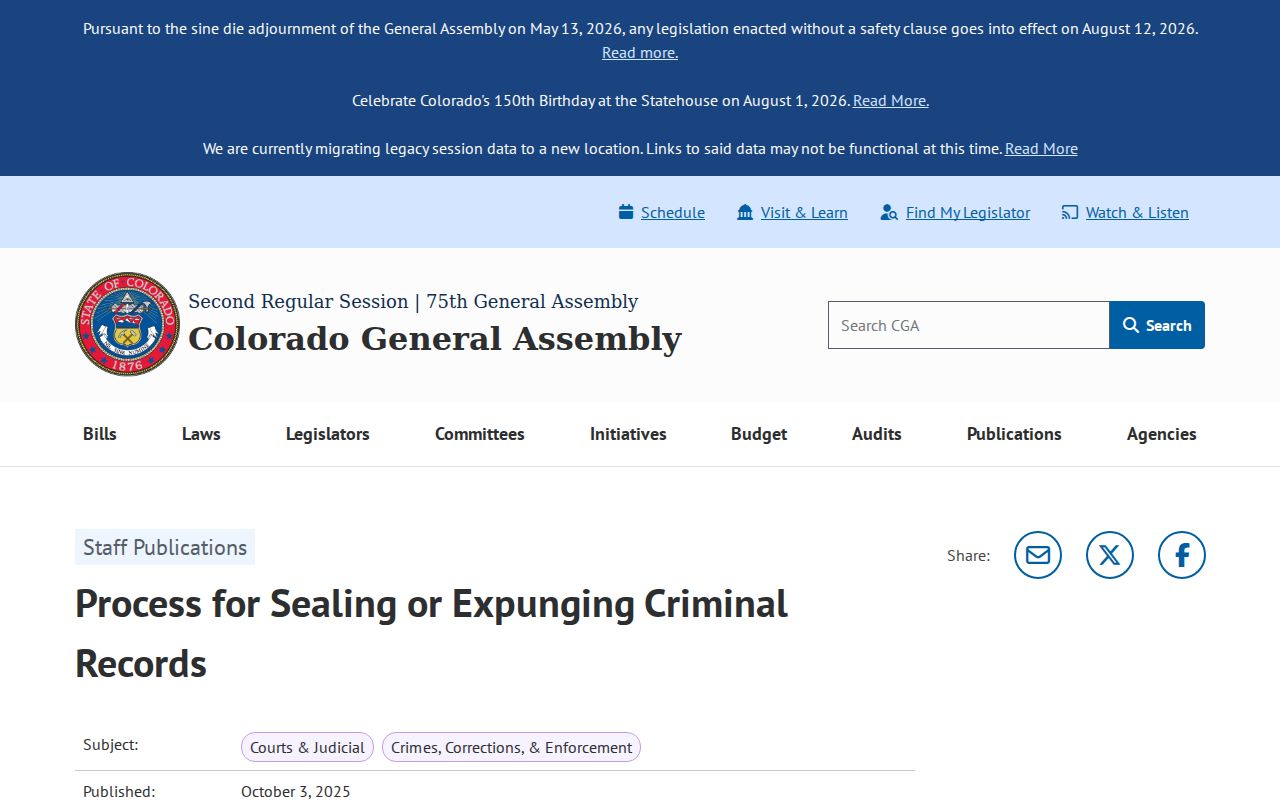
The legislative overview gives useful context, while the current court forms and the specific Jefferson County file control the next step.
The court self-help route is also represented in this source image.
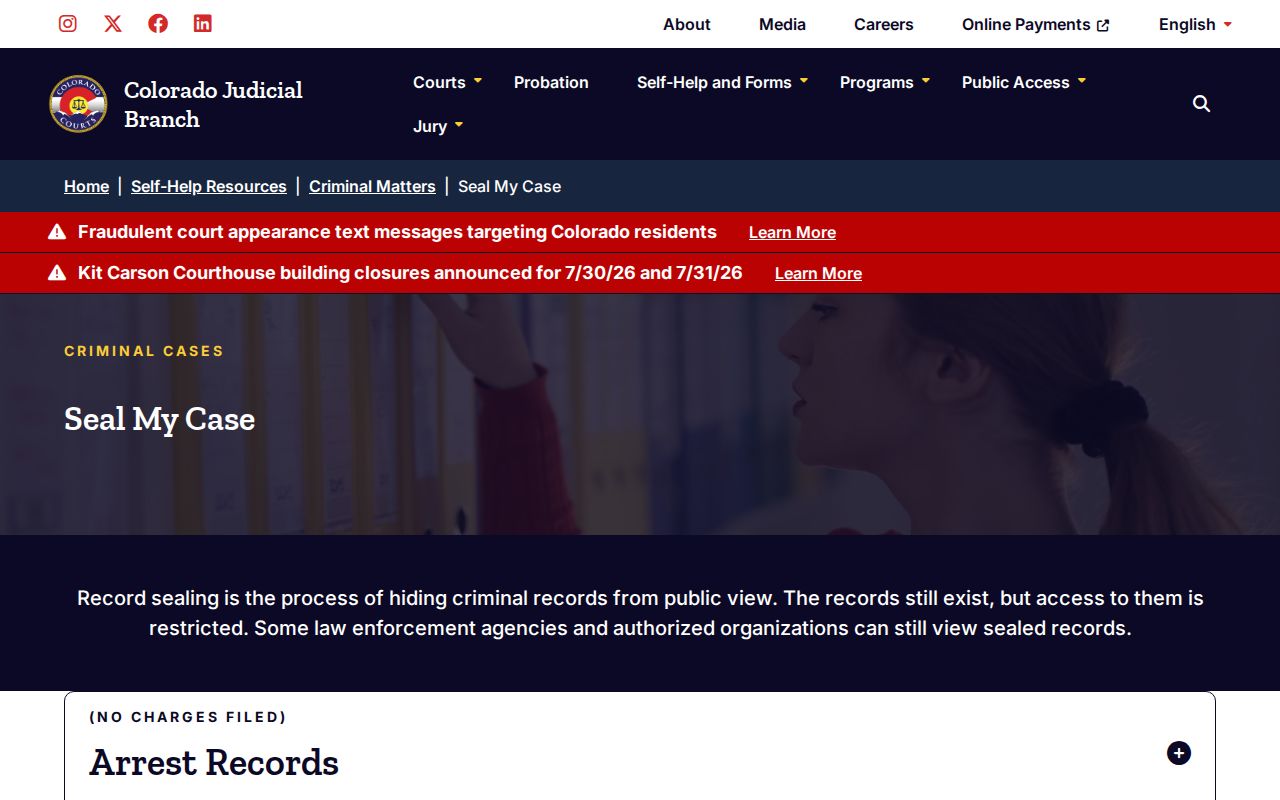
After an order enters, verify the docket and personal CBI history because updates can take time or require a correction request.
Federal Cases Near Jefferson County
A federal prosecution does not belong in Jefferson Combined Court. Jefferson County lies in the U.S. District Court for the District of Colorado, whose official court site is shown below.
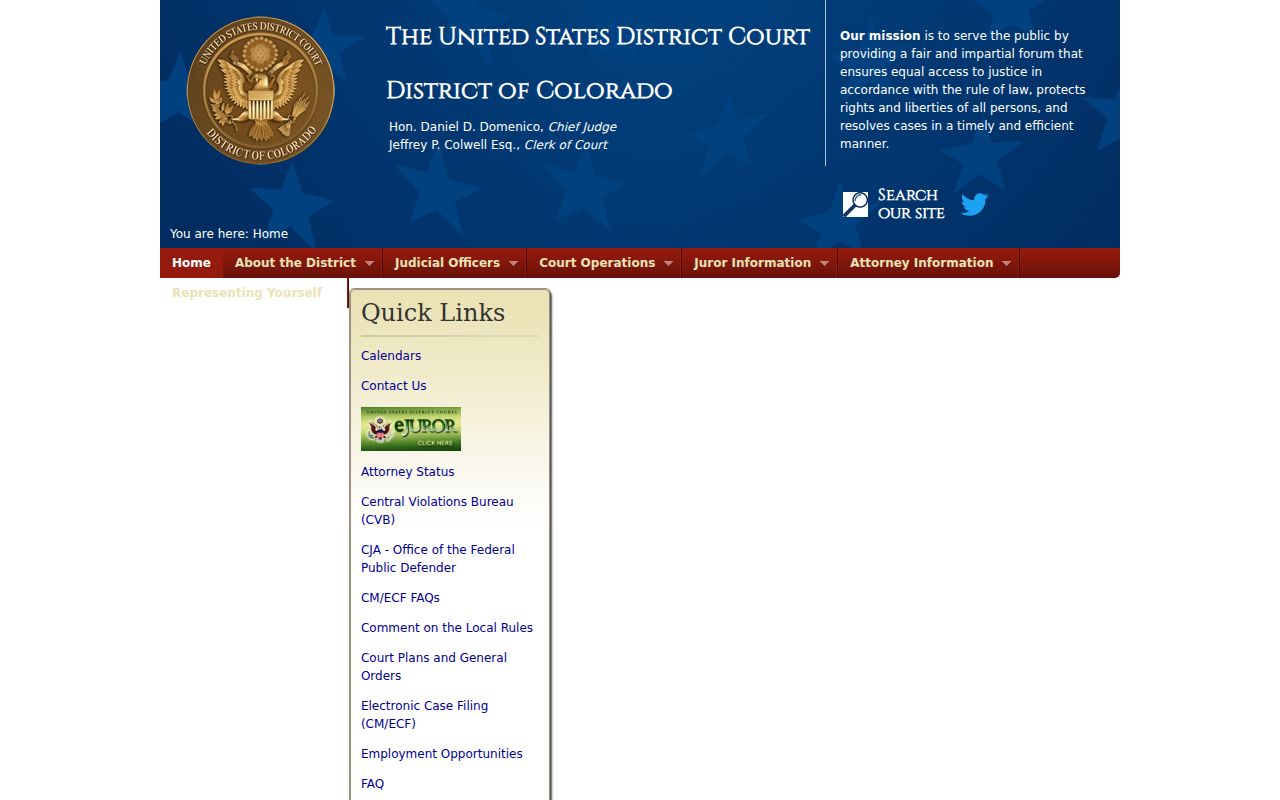
The federal court is a separate custodian with its own docket and document system.
PACER provides federal dockets and documents after registration, generally at ten cents per page and subject to its stated caps and waiver rules. Its source image appears below.
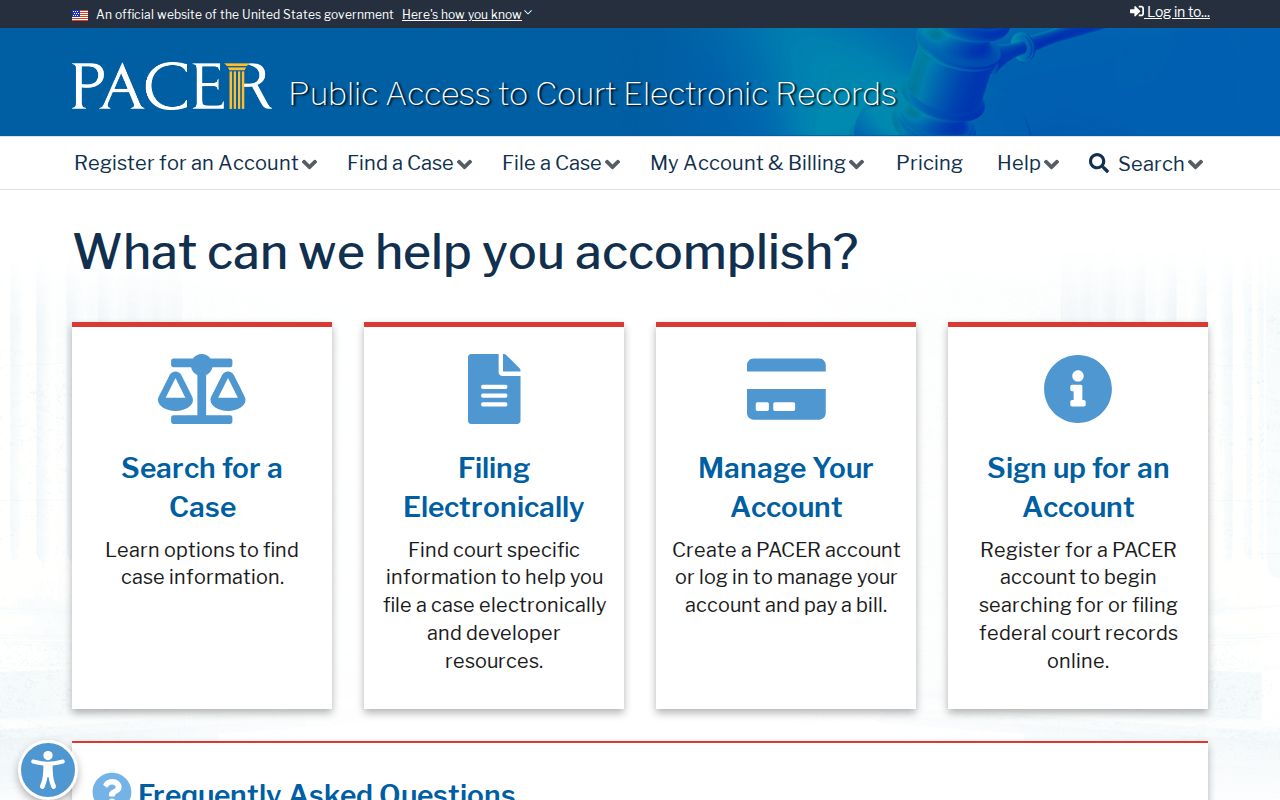
PACER should be used only for the federal layer, not for a Jefferson County District or County Court case.
Access and Restrictions
Colorado court access does not make every part of every case public. Sealed files, juvenile material, protected victim information, and other restricted content may not appear online or may be redacted. An absent search result can also reflect a wrong date, the wrong court, a municipal case, or the limits of a calendar search.
Ask the Jefferson County clerk whether the file exists and what can be released. Under the Colorado Criminal Justice Records Act, criminal justice custodians apply statutory access rules, but Judicial Branch records also follow court directives. Aggregate court data uses a different process under CJD 05-01 Addendum A. Never assume that a missing online result proves no case exists.
A reader correcting a personal CBI history should obtain the certified Jefferson County disposition first. CBI warns that reporting lag, unmatched case identifiers, or an omitted disposition can leave state history incomplete. Compare the repository entry with the originating case, then use the court or CBI challenge route that fits the error. The arresting agency cannot change a judgment entered by the court, and CBI does not hold the agency's narrative report.
Note: A docket identifies court activity, while only the clerk can provide the official filed record or certified disposition.